
The fear factor of 5-axis machines
Four fears come up when shops talk about 5-axis: the price, the crash risk, the programming, and the learning curve. Each one has a specific, checkable answer today, and this article goes through them one at a time.
Fear 1: "A 5-axis machine cannot pay for itself in my shop"
You do not need impellers or blisks to justify a fifth axis. The payback usually comes from fewer setups, which means less time spent repositioning the workpiece and none of the errors that repositioning adds. A part that needs four clampings on a 3-axis machine often needs one or two on a 5-axis machine, and each clamping you remove takes its fixture, its touch-off, its queue time, and its tolerance stack-up error with it. Fewer setups also mean less work in progress on the floor.
The second payback lever is quoting. Five-sided access in one clamping lets a shop quote parts it had to decline before.
The counterpoint: if your work is plate, pure 2.5D pockets, or long production runs of a single simple part, a good 3-axis machine with a pallet changer probably beats a 5-axis machine on cost per part. Run the setup-count math on your own parts to see which one wins.
Fear 2: "I am going to crash it"
A 5-axis machine has more ways to collide than a 3-axis machine: head, table, fixture, and tool interact at angles you sometimes cannot judge by eye. The fix is a three-step procedure. First, a tested post processor, verified against the actual machine kinematics. Second, toolpath simulation against a true machine model, in your CAM system or dedicated verification software, before anything runs. Third, controlled first runs: reduced rapids and single-block through the risky transitions.
The first two steps move collisions from the machine to the screen. The third catches what is left at a speed the operator can stop.
Fear 3: "The programming is beyond us"
Most 5-axis work is 3+2: the machine tilts the part to a fixed angle, then cuts like the 3-axis machine your programmers already know. The CAM workflow is the same one your shop runs today, plus a tilt operation. Simultaneous 5-axis has its place (undercuts, ports, true sculptured surfaces), but a shop can earn with 3+2 for years before needing it.
Programming also happens off the floor. The operator loads, verifies, and runs; nobody needs vector math at the control.
Fear 4: "My machinists will not come along"
The learning curve has shortened as CAM software matured and controls added dedicated 5-axis functions. Modern controls offer a tilted working plane and tool center point control. In 3+2 work the cut itself is a 3-axis operation in a tilted plane, so an experienced 3-axis machinist starts from skills they already use. What actually changes is status: your best machinist becomes the person who brings in the new work. Frame it that way.
What to do with this
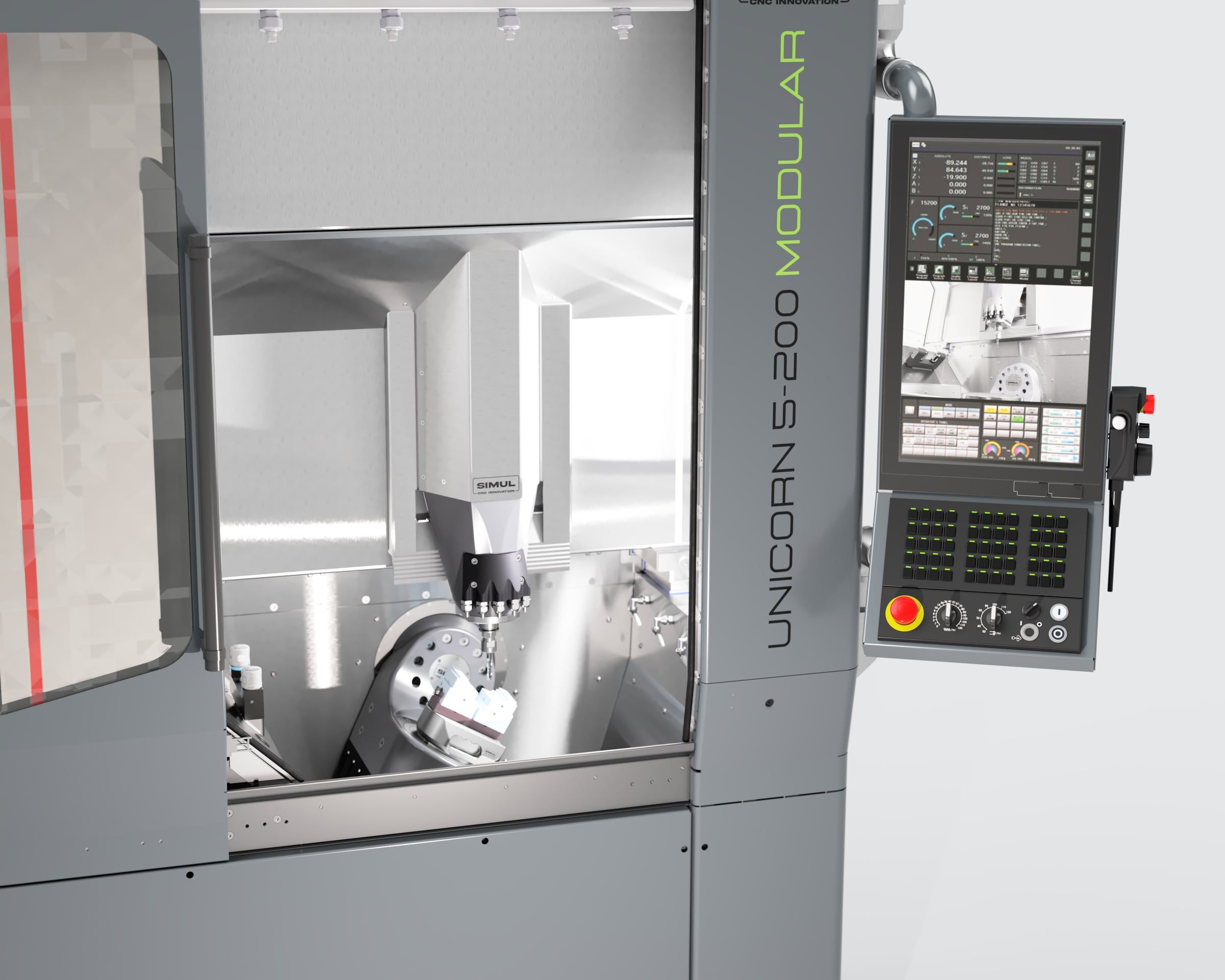
Take your three most fixtured parts and count clampings, fixtures, and touch-offs per part. If the count drops by half or more on a 5-axis machine, the machine is worth quoting. That math works for any builder's machine. If you want ours in the comparison, the Unicorn 5-200 Modular publishes its specifications and its price.